

INDUSTRY
ECOSYSTEM
FOR
 DESIGN
EDUCATION

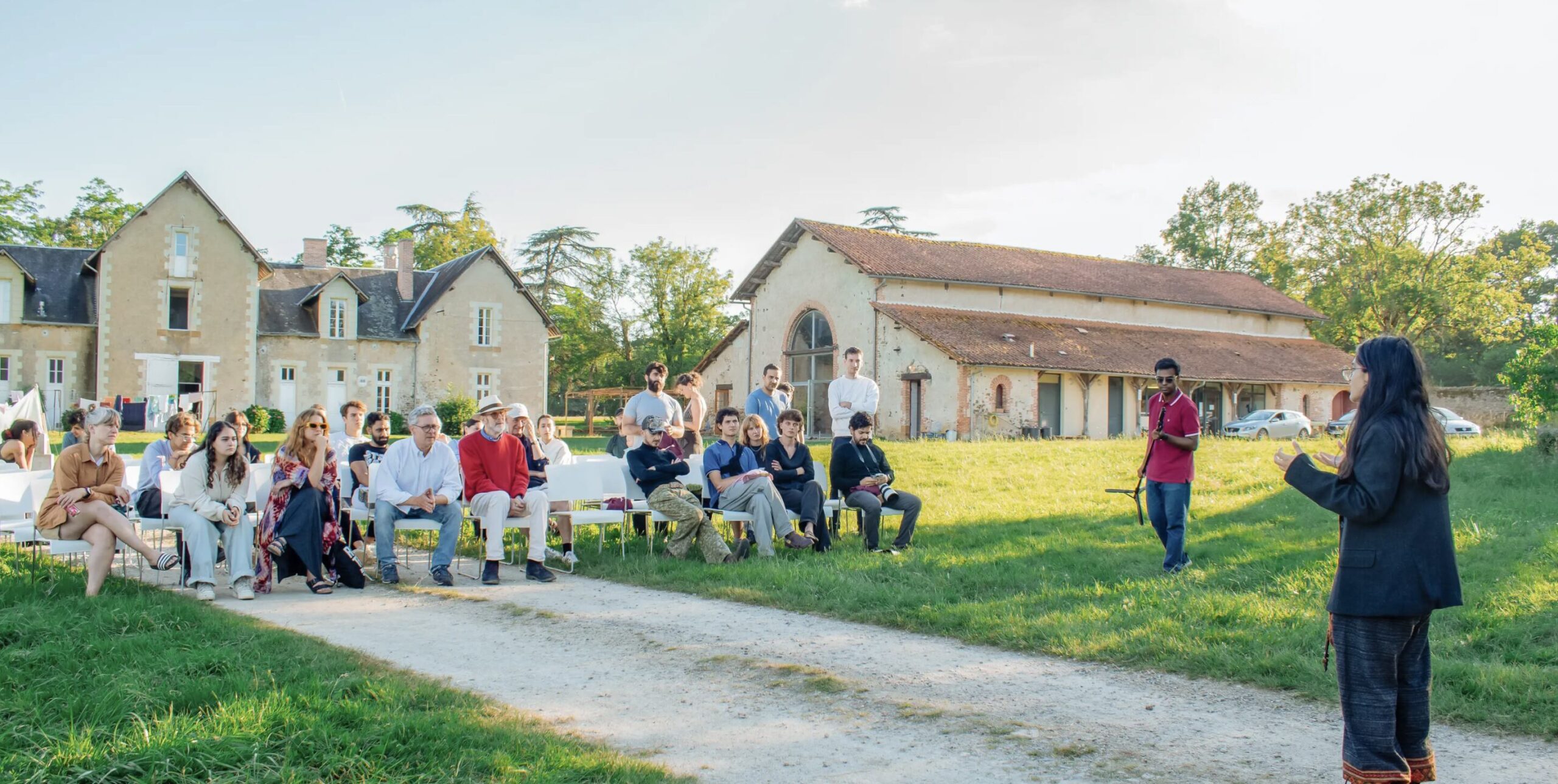
The Design Village launched its Europe campus in Italy, here Indian design education meets European traditions, sustainability, and cultural exchange. Through immersive residencies and transformative programmes, this campus will allow learners to engage with diverse contexts and pressing challenges, shaping the global future of design.
INDUSTRY
ECOSYSTEM
FOR
DESIGN
EDUCATION
INDUSTRY
ECOSYSTEM
FOR
DESIGN
EDUCATION

INDUSTRY
ECOSYSTEM
FOR
DESIGN
EDUCATION

Programmes
Discover UGC-approved degree programmes
Campus Tour
Experience our vibrant campus virtually
TDV EU
Explore the possibilities
Programmes
Discover UGC-approved degree programmes
Campus Tour
Campus Tour Explore the Village virtually
Student Work
Explore innovative student projects
(ABOUT)
Design institution for discerning learners, built by globally-recognized academicians and domain experts, offering comprehensive industry-centric education, to prepare designers who transform the world.

Degree conferred by O.P. Jindal Global University,
Institution of Eminence, Ranked #1 Private University
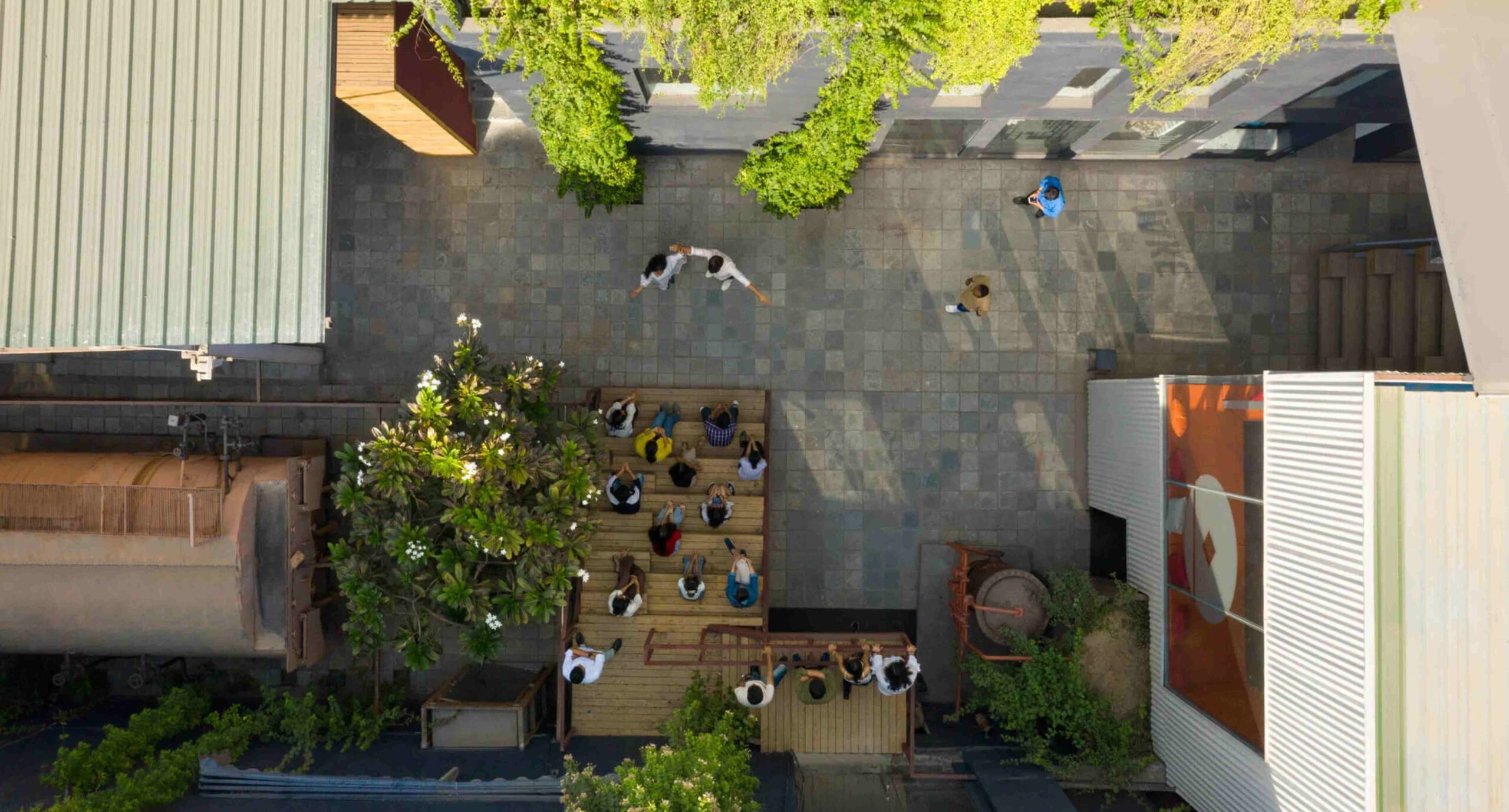
The Design Village (TDV) is a non-profit universal design school with campuses in India and Italy, established in 2014. Over a short journey of a decade, TDV has built its reputation as a unique d-school advancing global engagement, social impact and sustainability in creative education. The school has 65+ faculty from world's leading institutions and companies, who join hands to bring unmatched academic knowledge and cutting-edge exposure to its 400+ students.
TDV offers industry-centric B.Des and M.Des degree programmes in collaboration with O.P. Jindal Global University (JGU) at its India campus. TDV and JGU's partnership strengthens design education by combining TDV's expertise in design thinking and industry-focussed learning, with JGU's global academic standards
(EDUCATION)
Industry-Centric Programmes
(01)
Bachelor of Design (HONOURS)
(01)
(02)
Master of Design
(01)
Emphasizes on the creative and technological abilities to prepare designers who
work across traditional and modern mediums, applying themselves to create print
media as well as interactive digital products, systems and services.
Merges the two seemingly specialist fields of fashion and textile design with a focus on their inherent relationship, training students in designing and manufacturing clothing, fabrics etc.
Focusses on the imagination and execution of built environment by imparting a creative mindset, technical skillset, and real-world exposure of buildings, exhibitions, installations, and other forms of space.
Trains students on the end-to-end product design process, right from understanding the user, ideating solutions, creating prototypes, and delivering finished physical products such as automobile, furniture, and other consumer goods.
Prepares designers to transcend traditional disciplinary boundaries by integrating knowledge, methods and perspectives from diverse fields such as engineering, sciences and social sciences.
(HIGHLIGHTS)
Unique design school founded by designers in India, after extensive research into leading global institutions such as Aalto, Harvard, Stanford, Politecnico di Milano, RCA, Tongji University, and TU Delft, shaping a distinctive ecosystem to nurture future-ready designers.

Award-winning Campus located within the Industrial Heart of Noida, Delhi NCR

Recognition at Inaugural Award Ceremony for Curriculum & Pedagogical Frameworks

Accredited labs, a US non-profit emerged from Massachusetts Institute of Technology
(TESTIMONIALS)
Voices from across the world share how The Design Village is preparing designers to think differently, work innovatively, and take on meaningful professional journeys.
DON NORMAN
Father of UX Design, Ex-VP of Advanced Technology, Apple, USA
H.E. Marisa Gerards
Indian Ambassador of The Kingdom of the Netherlands
LUISA COLINA
Full Professor Former Dean, Politecnico di Milano, Italy
“I think that you can see really how design is not just on product, spaces, fashion but really also on education. Here the educational path of a student that has also been designed. “

(CAMPUS)
Life At The
Village
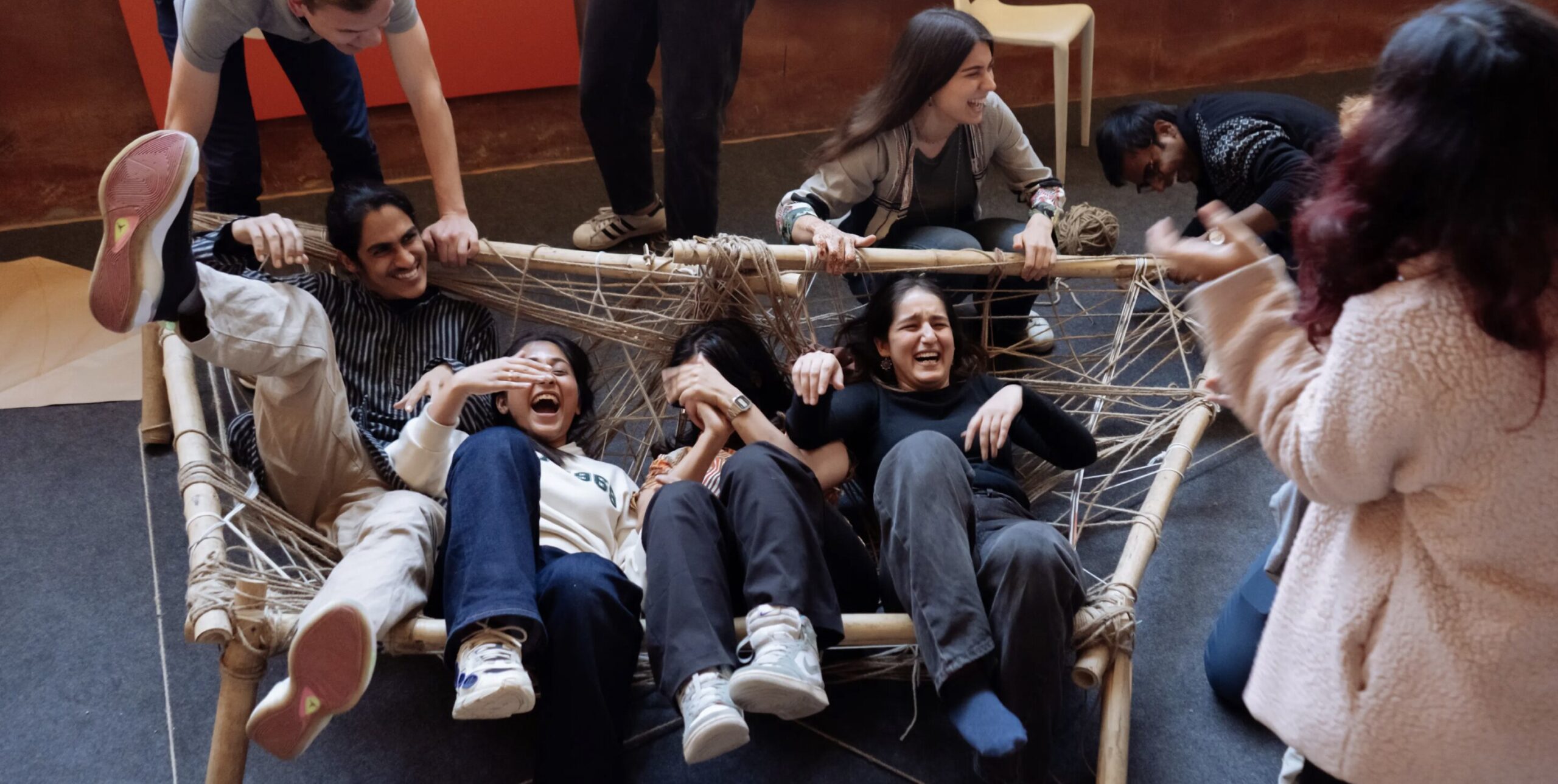
Life at the Village captures the everyday energy of TDV. From classes and projects to events and gatherings, this section brings together the latest happenings, giving a glimpse into the rhythm of life at the Village.
Orientation 2025

Beyond Borders

Japan Archotour

(PRESS)
IN THE SPOTLIGHT





(FAQs)
FREQUENTLY
ASKED
QUESTIONS
1) What design programs does The Design Village offer?
1)The Design Village offers a variety of undergraduate and postgraduate design programs, including Product Design, Fashion Design, Communication Design, Interior Architecture, and more. Each program is designed to provide a comprehensive education in design principles, techniques, and industry practices.
2) What makes The Design Village the best college for designing in India?
2)As the best college for designing in India, The Design Village stands out for its commitment to nurturing creative talent and providing hands-on learning experiences. Our emphasis on creativity, critical thinking, and practical skills ensures that our graduates are well-prepared to excel in competitive design fields.
3) What kind of facilities can students expect at The Design Village?
3)Students at The Design Village have access to cutting-edge facilities, including well-equipped design studios, workshops, digital labs, and a comprehensive library. The campus also features collaborative spaces that encourage creativity and innovation, fostering a vibrant learning community.
1) What are the eligibility criteria for getting into a design college in India?
1)The eligibility criteria for getting into a design college in India will vary depending on the specific course you are interested in. However, TDV will require you to have completed 10+2 or graduation as applicable, and entrance exam or an equivalent qualification.
2) Can international students apply to The Design Village’s design programs in India?
2)Absolutely, international students are welcome to apply to our design programs in India. We provide assistance with visa procedures and offer a diverse, multicultural environment that enriches the learning experience for all students.
3) What kind of facilities can students expect at The Design Village?
3)Students at The Design Village have access to cutting-edge facilities, including well-equipped design studios, workshops, digital labs, and a comprehensive library. The campus also features collaborative spaces that encourage creativity and innovation, fostering a vibrant learning community.
1) What are the career pathways available after completing a design course at The Design Village?
1)Graduates from The Design Village pursue diverse career paths such as interior designers, graphic designers, fashion designers, UX/UI specialists, and design consultants. Our strong industry connections and placement support ensure graduates have access to exciting opportunities in top design firms and companies worldwide
1) How does a degree from The Design Village compare directly to legacy options like NID, NIFT, or commercial institutes like Pearl Academy?
Legacy public institutes operate on rigid, traditional departmental divisions where specializations rarely collaborate. Conversely, massive commercial universities often focus on high-volume, factory-scale enrollment that dilutes individual student mentoring.
The Design Village (TDV) provides a targeted, boutique alternative located in the corporate, industrial and creative hub of Noida, Delhi NCR. TDV combines a personalized student-to-faculty ecosystem with an interdisciplinary industry-centric curriculum. This agile model prepares students to solve complex, multi-industry challenges rather than working inside an isolated department.
2)What is the placement record, median salary range, and corporate network for TDV graduates?
TDV graduates enter the creative industry with high-impact portfolios built through continuous real-world execution. Instead of relying on mass placement pipelines that bundle creative talent into generic corporate layout roles, TDV maps individual professional trajectories.
Our graduates are actively recruited by elite consulting firms, design studios, and multinational enterprises. Top recruiters in our network include:
- Deloitte
- Tata Elxsi
- Reliance Industries
3)Why did TDV receive the Forbes award, and how is its global credibility validated?
TDV earned recognition as a Forbes award-winning campus due to its path-breaking approach to creative education via state-of-the-art learning infrastructure. The institute’s unique teaching methodologies have received praise from preeminent global authorities.
TDV is also India’s first institute to be recognised by the Don Norman design Award for its Humanity-Centric Design Curriculum
Additionally, student work is consistently validated on elite global platforms, including showcases at the prestigious London Design Biennale where it was the Indian representative and won the first runner up. Along with a myriad of Biodesign Challenge, Cumulus prizes for groundbreaking work in the domains of science, technology and design.
4)What is the annual student intake and batch strength at TDV?
TDV deliberately rejects the mass enrollment models used by factory-style design schools. We maintain a strictly curated, low annual student intake across our B.Des and M.Des programs. This selective cohort structure ensures an intimate student-to-faculty mentoring ratio, granting every designer consistent, daily access to master-level instruction and customized portfolio guidance.
1) What is Fashion and Textile Design, and why does TDV integrate them into a single program?
Traditional education separates fashion (the construction of the garment) from textile design (the creation of the material fabric). In the modern design landscape, this division is completely obsolete.
TDV integrates Fashion and Textile Design because a forward-thinking apparel designer must understand material innovation, sustainable fabric lifecycles, and smart textiles from inception. By learning both disciplines simultaneously, our students design garments from the yarn level upward, making them highly competitive candidates for conscious luxury labels and international fashion houses.
2)What is Product and Industrial Design, and why are they taught together?
Product design focuses heavily on human-centric form, ergonomics, and user experience, while industrial design deals with mass production, manufacturing materials, and scalable engineering mechanics.
TDV teaches them as a singular, unified discipline. This ensures that our designers do not just create conceptual prototypes that look attractive on a screen; they understand the manufacturing, and supply-chain logistics required to scale those products globally.
3)What is Space and Interior Design, and how does it differ from traditional interior decoration?
Traditional interior decoration focuses primarily on the surface aesthetics, styling, and furnishing of an existing room. Space and Interior Design at TDV goes deeper, exploring how humans interact with built environments, sensory architecture, exhibition spaces, and adaptive reuse systems. Our students analyze spatial psychology, lighting architecture, and sustainable materials to structurally re-engineer environments for commercial, residential, and public arenas.
4)What is Communication and Interaction Design, and how does it prepare students for the digital economy?
Communication Design covers visual storytelling, branding, typography, and graphic systems. Interaction Design focuses on how users navigate digital touchpoints, user interfaces (UI), and user experiences (UX) across software systems. TDV combines these fields to produce complete digital architects. Our students learn to merge pristine visual aesthetics with flawless technical interaction, preparing them to build next-generation products for tech platforms, digital agencies, and global product companies.
5)What is Transdisciplinary Design, and who should pursue it?
Transdisciplinary Design is an approach that transcends traditional boundaries between disciplines, integrating knowledge, methods, and perspectives from various fields to address complex challenges in innovative and holistic ways. It focuses on collaborative problem-solving, bringing together designers, scientists, technologists, and other experts to create solutions that are sustainable, adaptable, and impactful. By embracing a multi-stage, iterative process, transdisciplinary design seeks to transform systems, behaviors, and environments, encouraging designers to think beyond the limitations of a single domain and to work with a wide range of tools, mediums, and technologies.
6)What is Strategic Design Management?
Strategic Design Management is a multidisciplinary field that focuses on integrating design thinking with business strategy to drive organizational growth and innovation. It involves shaping strategic decisions that are impactful, customer-centric, and aligned with business objectives. Strategic Design Managers use a combination of design methodology, business analytics, and collaborative leadership to develop solutions and frameworks that meet the evolving needs and expectations of organizations and their stakeholders.
1) From which university is TDV affiliated, and is the degree UGC-approved?
TDV provides absolute regulatory clarity and academic validation. All degrees at The Design Village are officially awarded by O.P. Jindal Global University (JGU), recognized as an Institute of Eminence and India’s number one private university in the QS World University Rankings. This partnership ensures that your B.Des or M.Des degree is fully UGC-approved, legally recognized for government employment, and accepted by international universities for global higher education.
2)What international exposure does TDV provide through its dedicated Italy campus?
While many institutions only offer surface-level study tours, TDV operates its own permanent European footprint with The Design Village EU campus in Italy. This integrated extension allows our students to transition directly into European design hubs. Bachelor’s students will spend 2 dedicated months learning from international design masters, experience global design weeks, and build a cross-cultural portfolio that stands out in international creative markets and will be a mandatory part of your curriculum with all your travel, accommodation costs include in your fee.
3)How many international exchange partners does TDV have across the world?
TDV features an expansive global mobility framework spanning an active 18-country student exchange network with 44+ partner institutions. Our premier academic institutional partners include world-leading institutions such as:
- Politecnico di Milano (Italy)
- TU Delft (Netherlands)
- Royal College of Art (RCA)-Helen Hamlyn Center (United Kingdom)
1) What is the fee structure for B.Des and M.Des programs at TDV, and what are the scholarship criteria?
TDV maintains complete financial transparency with families. Our tuition fees cover baseline access to all high-end creative labs, professional prototyping machinery, and international industry networks. To support high-potential creative talent, TDV offers structured merit scholarships that cover up to 100% of tuition fees for qualifying applicants.
2)How does the initial seat booking registration fee act as career insurance for TDV students?
The registration fee at TDV is not a mere administrative deposit; it functions as a launchpad for your professional development. The moment a seat is secured, TDV activates your enrollment infrastructure. This grants you early access to preparatory masterclasses, foundational toolkits, industry reading archives, and direct interaction with design mentors. This ensures that you begin your formal first semester well ahead of the traditional learning curve.
3)Are students provided opportunities to earn while learning through live industry projects?
Yes. TDV functions as a professional design ecosystem. Through our internal studio labs and active corporate partnerships, advanced students are regularly selected to work on live, paid client briefs and design consultancy assignments. This model allows you to offset educational expenses while adding verified commercial projects to your resume before graduation.
4)Does TDV train students on Artificial Intelligence (AI) tools and industry-standard design software?
Yes. TDV treats technical software mastery and Artificial Intelligence as essential foundational skills. Students receive rigorous training across industry-standard creative suites, including Adobe Creative Cloud, Figma, Rhino, and advanced 3D prototyping software.
Furthermore, our curriculum actively embraces generative AI workflows. Students have access to the whole Adobe Creative Cloud Subscription and access to Adobe Firefly which is a closed source AI tool that can be used commercially. They learn how to responsibly deploy AI engines for rapid concept generation and advanced workflow optimization, ensuring they enter the job market fully prepared for the future of tech-driven design.